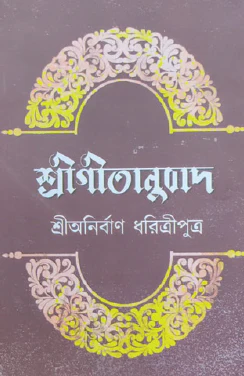
Shrigitanuvad (Bengali Version)
Book Details:
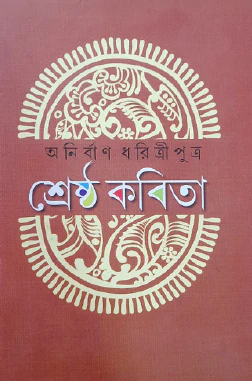
- Author: Anirban Dharitriputra
- Format: Hardcover
- Language: Bengali
About the Book:
"Shrigitanuvad" by Anirban Dharitriputra is a poetic and philosophical interpretation of the Bhagavad Gita, presenting it not only as a sacred scripture but also as a profound literary work. The book reflects on the idea that the Gita transcends conventional religious boundaries, offering deep insights into human existence, duty, and self-realization.
Drawing from the perspectives of eminent thinkers, the work emphasizes that the Gita is not merely meant for superficial reading or memorization, but for deep contemplation. It highlights the essence of true humanity, spirituality, and inner awakening. Through a poetic lens, the author reinterprets the timeless dialogue between Krishna and Arjuna, encouraging readers to reflect, question, and discover their own path.
The book ultimately presents itself as an invitation—just as Krishna leaves the final decision to Arjuna, the author humbly places the interpretation before the reader, urging them to think and choose their own understanding.
Product Information
Product Information
Shipping & Returns
Shipping & Returns
Description
Book Details:
- Author: Anirban Dharitriputra
- Format: Hardcover
- Language: Bengali
About the Book:
"Shrigitanuvad" by Anirban Dharitriputra is a poetic and philosophical interpretation of the Bhagavad Gita, presenting it not only as a sacred scripture but also as a profound literary work. The book reflects on the idea that the Gita transcends conventional religious boundaries, offering deep insights into human existence, duty, and self-realization.
Drawing from the perspectives of eminent thinkers, the work emphasizes that the Gita is not merely meant for superficial reading or memorization, but for deep contemplation. It highlights the essence of true humanity, spirituality, and inner awakening. Through a poetic lens, the author reinterprets the timeless dialogue between Krishna and Arjuna, encouraging readers to reflect, question, and discover their own path.
The book ultimately presents itself as an invitation—just as Krishna leaves the final decision to Arjuna, the author humbly places the interpretation before the reader, urging them to think and choose their own understanding.