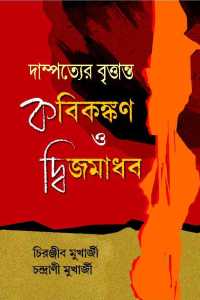
Dampatter Brittantar Kabikankan O Dwijamadhab (Bengali Version)
Book Details:
- Authors: Chiranjib Mukherjee, Chandrani Mukherjee
- Publisher: Bangiya Sahitya Samsad
- Language: Bengali
About the Book:
In the medieval Bengali literary tradition, the Mangal Kavya genre often appears as a distant, historical relic. Yet, within this tradition lies the fertile ground that continues to resonate with timeless human themes. Dampatter Brittantar Kabikankan O Dwijamadhab explores the depiction of marital life in the works of two prominent Chandimangal poets—Kabikankan Mukund Chakraborty and Dwijamadhab—whose poetic genius still demands detailed analysis.
This book draws parallels between the marital crises of medieval society and modern social experiences, highlighting how the understanding of marital relationships evolves over time. It examines the nuances of marriage, the conception of marital bonds, and the subtle differences in perspective between the two poets, offering an in-depth look at marriage as represented in their poetry. Through this lens, the work bridges medieval literary artistry with contemporary reflections on relationships, making it a unique study of social and literary continuity.
Product Information
Product Information
Shipping & Returns
Shipping & Returns
Description
Book Details:
- Authors: Chiranjib Mukherjee, Chandrani Mukherjee
- Publisher: Bangiya Sahitya Samsad
- Language: Bengali
About the Book:
In the medieval Bengali literary tradition, the Mangal Kavya genre often appears as a distant, historical relic. Yet, within this tradition lies the fertile ground that continues to resonate with timeless human themes. Dampatter Brittantar Kabikankan O Dwijamadhab explores the depiction of marital life in the works of two prominent Chandimangal poets—Kabikankan Mukund Chakraborty and Dwijamadhab—whose poetic genius still demands detailed analysis.
This book draws parallels between the marital crises of medieval society and modern social experiences, highlighting how the understanding of marital relationships evolves over time. It examines the nuances of marriage, the conception of marital bonds, and the subtle differences in perspective between the two poets, offering an in-depth look at marriage as represented in their poetry. Through this lens, the work bridges medieval literary artistry with contemporary reflections on relationships, making it a unique study of social and literary continuity.